November
2016
HYDROCARBON
ENGINEERING
90
two possible methods for preparation.
1, 2
Since D5708 is
utilised at PES, discussions below will focus on this
procedure. Method A of D5708 prepares the sample by
dissolving in an organic solvent while Method B uses
hydrofluoric acid. It is important to perform a proper
safety hazard analysis before changing from a solvent to
acid digestion method, as working with acid in the
laboratory requires different safety processes.
Grace has conducted significant research in the area of
feed analysis, and has found that preparing the sample with
acid digestion will yield more accurate results. The acid
digestion method (B) will measure the total metal content,
whereas the solvent digestion method (A) will not detect
metals present in insoluble particulates. This was evident
with calcium in the past in FCC feed at PES, and has now
been noted with iron. The balances around iron on the
FCC Ecat stopped closing in April 2014 when PES began
processing a significant amount of shale oil crude. At this
time, PES tested samples via the acid digestion method to
better understand the total iron and calcium levels being
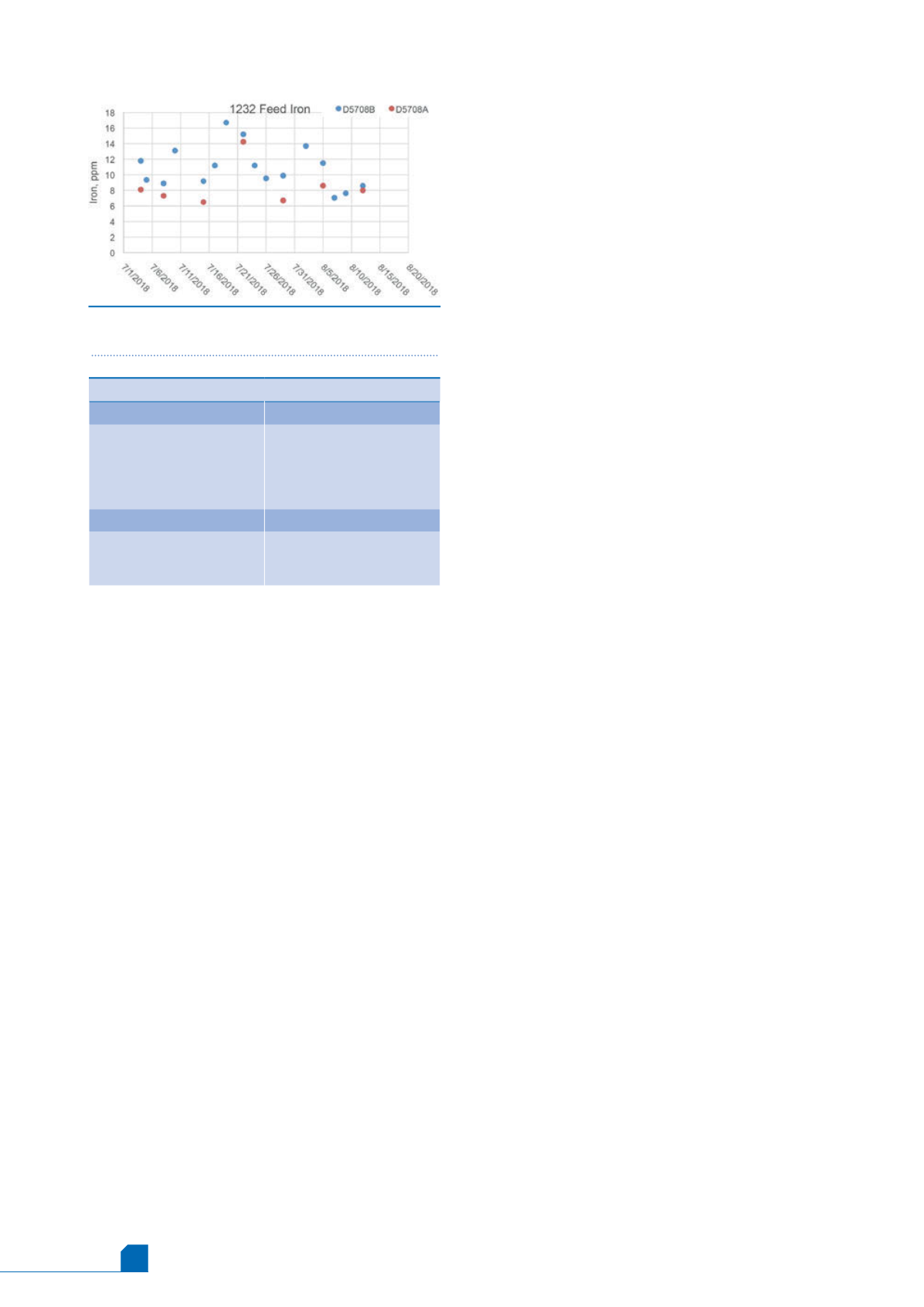
charged to the FCC units. As seen in Figure 1, the iron levels
measured by the acid digestion method averaged 30% higher
than those measured by the solvent digestion method, with
occasional differences greater than 50%.
Not only is routine and accurate feed analyses essential
for an accurate FCCU iron balance, it is also critical for
maintaining healthy levels of contaminant metals, especially
iron on FCC Ecat. A proactive response to unexpected spikes
in feed iron can allow the refinery to continue to operate at
planned rates economically. In addition, this data can be
used to work with crude purchasing groups to select the
optimum crude(s) for the refinery by minimising difficult
contaminant metals such as iron.
Ecat monitoring
Grace and PES collaborated to develop an extensive
monitoring matrix based around Ecat analyses and key FCC
unit performance variables. This programme focused on
symptoms or indicators, along with variables used to
monitor changes with action triggers and appropriate
responses.
Based upon concerns expressed by the refinery, the key
variables monitored most closely were:
n
Metals levels, specifically iron and calcium.
n
Ecat activity range, both high and low.
n
Unit response to catalyst physical properties (losses
and fluidisation).
n
Yield selectivities.
Predetermined variables for each area were monitored
via a gamut of catalyst and unit operational indicators. As an
example, the fluidisation response chart is shown in Table 1.
Similar response charts were prepared for each of the above
focal points.
To support the unit operating health monitoring, a
standard and routine sampling procedure was established to
provide key information. Most of this sampling was routine
to FCC audit and control, for example, regular and frequent
Ecat and feed sampling. These routine methods were used to
calculate the FCC unit iron balance. Iron on Ecat, purchased
Ecat (PCAT) and feed were all tracked. Building a database
from these analyses helped to establish the added iron
threshold for the PES FCC units. Calcium balances were built
using the same analyses. Shifts in catalyst ABD were also
successfully used to detect early stages of iron poisoning.
Matching PCAT to the unit objectives and constraints
was also important for successful FCC unit operations. Using
the Grace equilibrium catalyst database, inconsistencies in
properties between PCAT and the base catalyst were
identified particularly in bottoms cracking and gasoline/LPG
selectivity. PCAT purchases were adjusted to select materials
more compatible with the catalyst and objectives, as shown
in Figure 2.
The non-standard Ecat testing, however, was very
significant in terms of unit support. In particular, Ecat was
regularly tested for diffusivity limitations. Using the IGC
methods cited in part one of this series,
3
Grace and PES were
able to quickly distinguish between true iron contamination
problems and other causes of unit changes unrelated to iron
in feed and on Ecat. This helped direct, and more precisely
focus, activities and response to unit operations and yields.
Another non-standard method employed was scanning
electron microscopy (SEM). SEM is an excellent qualitative
method for detecting iron nodules. Furthermore, Grace used
the electron probe microanalysis (EPMA) method to map
concentrations of contaminant metals on the surface of the
catalyst.
During the initial stages of the operation with MIDAS®
Gold FCC catalyst, ACE testing was conducted to
differentiate between feed, operations and catalyst effects in
the 1232 unit. Calcium and iron in feed were related to
different crude types and the inputs of various crude sources
were continuously monitored in order to isolate and identify
changes arising from these factors. As discussed, numerous
Figure 1.
1232 feed iron testing by ICP. Acid digestion
(B) versus solvent digestion (A).
Table 1.
Ecat fluidisation monitoring
Symptoms
Monitoring
– Low slide valve DPs
– Reduced feed rate
and/or riser temperature due
to alarms
– Slide valves dPs
– Slide valves % opening
– Pressure survey
– Fluidisation points
– Grace Ecat UMB/UMF, PSD
Action level
Corrective actions
– Unable to achieve target
feed rate
– Unstable catalyst circulation
– Adjust PSD of fresh catalyst
– Add fines to fresh catalyst
– Review PCAT options


