Acid activation of mineral catalyst
Mineral catalyst is manufactured through acid
activation of clay, which comes from a very special
deposit. BASF uses Aberdeen clay, which is known for
its high quality. It is activated by sulfuric acid, and
converted using a multi-stage process into the
granular mineral catalyst F-24X.
Figure 2 shows the chemistry of activation, where
an acidic hydrogen ion from the sulfuric acid opens
the layer structure and forms acid sites.
Chemical and physical properties
The properties of F-24X are:
n
Moisture (free at 105
˚
C, wt% loss).
2
n
Residual acidity (mg KOH/g at phenolphthalein
endpoint).
14
n
Bulk density lb/ft
3
(g/cc).
55 (0.88)
n
Surface area (BET method), m
2
/g.
400
n
Particle size passing 8 mesh, 97.5 wt%.
n
Passing 60 mesh, 5 wt% (Tyler standard sieve).
A large advantage is the residual acidity of 14 mg
KOH/g at the phenolphthalein endpoint, which is
responsible for the superior activity of the catalyst.
Key aspects of project development
Galp was undertaking a revamp of its alkane unit for
olefin removal using BASF’s F-24X catalyst. The feed
conditions were as follows:
n
Flow: hexane and heptane.
n
Design flow rate: 90 - 180 tpd.
n
Phase: liquid.
n
Operating temperature: 130 - 160˚C.
n
Operating pressure: 8 bara.
The feed composition consisted of:
n
Impurity: bromine index.
n
Inlet specification olefins: 7000.
n
Required outlet: <1000.
Operating description
Two treaters (R-0251A/B) are used for the saturation of
refined olefins (production of hexane and heptane
with bromine number ≤1 GBR/100 g) and the
benzene/toluene stream, with a view to meet the
specification with regard to acid wash colour
parameters (≤1 for benzene and ≤2 for toluene). Thus,
there are two different services (U-0500 and U-0200),
typically with one bed dedicated to each one.
As far as the severity of the adsorption is
concerned, it is proportional to the temperature at the
inlet of the bed. Accordingly, throughout the cycle,
the clay loses capacity, and the temperature has been
increased in order to maintain the same degree of
alkylation after some deactivation. Nevertheless, in
the treatment of hexane, the temperature at the inlet
of the bed may not exceed 160˚C, to avoid
vapourisation of the feed. A further temperature
increase can result in an approximately 20% higher
capacity of the catalyst. The end of the cycle is
GLOBAL LEADER IN DEVELOPMENT,
ENGINEERING AND TESTING
Superior Reliability
Full Range of Cryogenic Pumps
• In tank, removable pumps
• Vessel-mounted pumps
• Fixed mounted pumps
Low total cost of ownership
No shaft seals - maximize safety,
with low maintenance costs
Unparalleled quality
Exceptional pump-down capability
(Extremely low NPSHR)
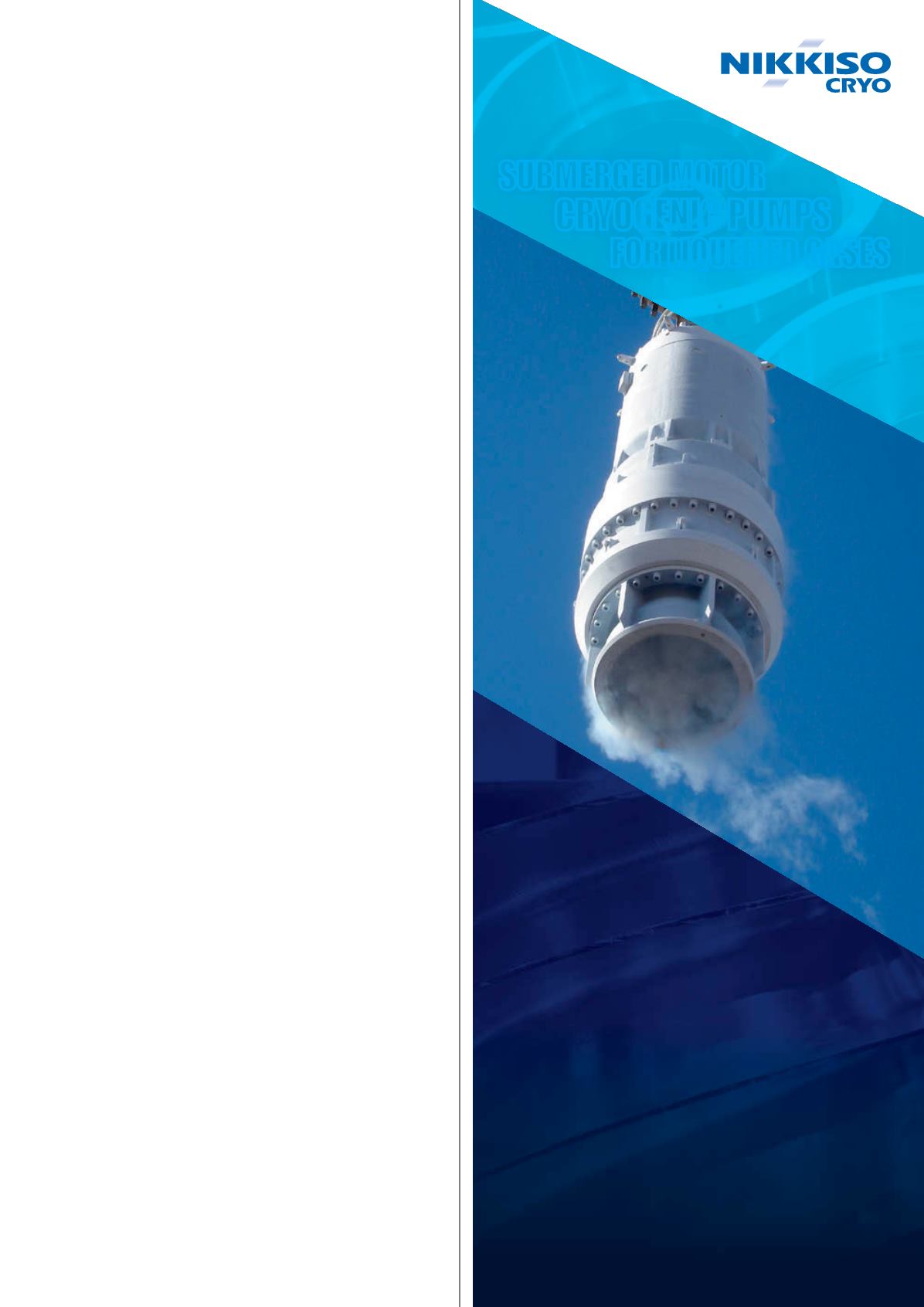
SUBMERGED MOTOR
CRYOGENIC PUMPS
FOR LIQUEFIED GASES


