November
2016
HYDROCARBON
ENGINEERING
70
from the previous generation of flare burner while the
right panel represents the test data from the Galaxy
flare burner.
A two-sample t-test reveals that, with 95%
confidence, the null hypothesis that the cross-lighting
probabilities are the same can be rejected. The Galaxy
lights, on average, 17% more quickly and therefore more
smoothly between burner heads when compared to the
previous generation of burners.
Reduced single burner flame length
Multipoint flares use a radiation barrier, or ‘wind fence’,
to achieve safe near-field thermal radiation levels.
Direct exposure to radiation from the flames, at full
vent gas flow rates, would ignite most flammable
objects in the immediate vicinity. In most applications,
there should be no visible flame over the top of the
radiation fence under any circumstances in order to
minimise flare visibility, radiation and community
impact.
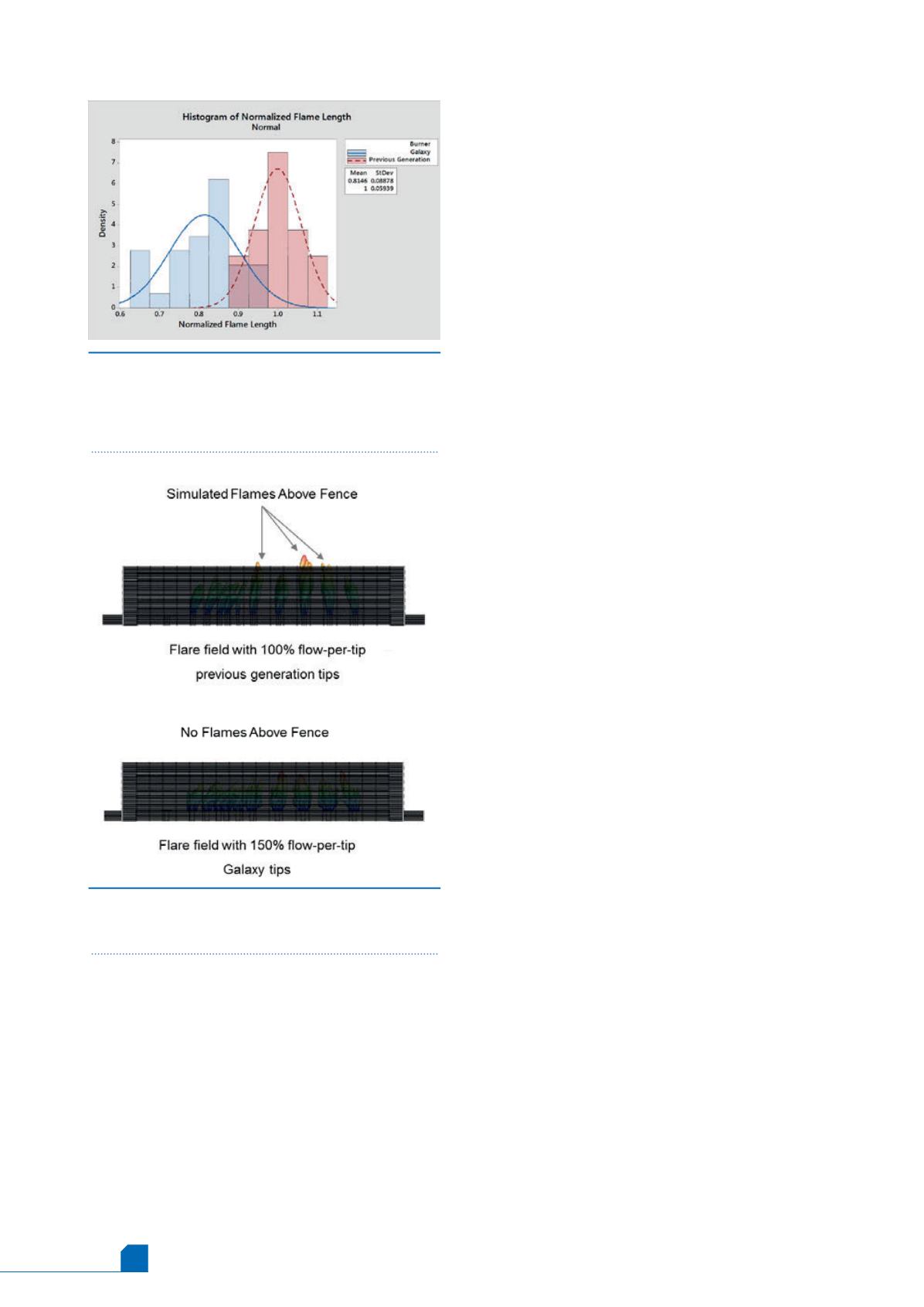
Figure 4 shows a comparison of single burner flame
lengths from the previous generation of flare burners
to a Galaxy burner with higher flow. The flame lengths
are presented on a normalised basis where 1 is equal to
the previous generation baseline flame length. The data
for the figure was obtained from physical performance
test observations. The Galaxy burner flame is, on
average, 20% shorter than the previous generation
burner, while flowing 1.5 times as much vent gas. The
flame height of the Galaxy can be further reduced as
required on a per-application basis, depending on the
vent gas composition.
Flare systems benefiting from the Galaxy flare
burner can use shorter radiation fences and fewer
burners. The height of the flame for an equivalent flow
rate has been greatly reduced compared to previous
generations of burner technology.
Reduced multiple burner flame length
One of the basic design tenets of a multipoint flare
field is a reduction in the flame length from the entire
vent gas flow. This produces a more manageable flame
size by exhausting the vent flow through many smaller
flames, as opposed to one large flame. Breaking a single
jet into multiple jets increases the mixing rate of the
vent gas with the surrounding air, resulting in smaller
jet dissipation length.
In the case of injection of multiple jets, it has been
established that the flow from the jets will merge. If
the flows from each individual burner merge before
combustion is complete, the zone where the flows
touch becomes starved for air and the flames become
longer. For this reason, the flames from multiple
burners will be longer than the flame from a single
burner.
The Galaxy flare burner has a unique
patent-pending feature that alleviates elongated flames
in multiple burner installations. An asymmetrical gas
injection pattern ensures that, where the flames must
touch for smooth and efficient cross-lighting, ultimate
flame length does not become longer than that of a
single burner flame. This feature has been tested in
multiple burner physical testing, and then extensively
evaluated using computational fluid dynamics (CFD).
Figure 5 shows a side-by-side comparison of flame
length and shape, as predicted by CFD modelling for a
previous generation of flare burner and for the Galaxy
flare burner. In the left side view, the coalescing flames
in the multi-burner installation of the previous
generation of burners results in flame tips rising above
the top of the radiation fence. The right side view
shows that the flames from the Galaxy burners stay
contained within the fence under the same operating
Figure 4.
A comparison of normalised flame length
data from the previous generation of burner to the
Galaxy. The Galaxy burner data was taken with 150%
flow rate compared to the previous generation, yet
maintains a 20% shorter flame.
Figure 5.
Simulation results showing that the Galaxy
burner maintains flames below the flare fence under
conditions where older technology could not.


