November
2016
HYDROCARBON
ENGINEERING
46
is usually applied using a spray coating method such as air
plasma spraying (APS), or high velocity oxygen fuel (HVOF)
– which one will depend on the required coating thickness
and composition.
Carbide coatings, which are deposited by using a high
velocity oxy-flame, are extremely wear resistant. Tungsten
carbides in combination with cobalt, nickel or
cobalt‑chrome matrices are used, preferably. Thanks to
improvements in the powder and the thermal spray
processes, the materials combine high wear resistance and
toughness with good corrosion resistance. Thermal spray
coatings can be applied to most substrates, but it is a ‘line
of sight’ process that makes the coating of complex shaped
components, such as impellers, difficult.
Chemical vapour deposition (CVD) processes, which are
used for complex components that are difficult to coat
with thermal spray, create very hard surface layers, but are
conducted at temperatures in excess of 850˚C. These high
temperatures limit the selection of possible substrates,
because structural changes and partial deformations can
take place during the cooling stage.
Not all coatings are the same
The improvements in performance and durability, afforded
by coating systems, have given rise to a large number of
businesses offering a coating service. The raw materials and
the basic equipment can be acquired relatively easily and
used to apply coatings to a range of equipment.
However, the quality of an HVOF coating, for example,
depends predominantly on the spraying parameters, such
as the material temperature, application velocity,
application rate and the quality of the equipment used.
Coatings such as these take time to apply correctly, which
will inevitably impact on the final cost of the
refurbishment. However, increasing the deposition rate will
increase the stresses within the coating, which over time
can cause the coating to degrade and fail prematurely.
The procedures and settings used by companies such as
Sulzer and its coating suppliers have been developed over
many years, applying extensive knowledge and experience
to the process is the only way to improve it. The final
procedure for each coating is closely guarded, proprietary
information ensuring that every client will receive the same
quality of coating across the world.
To illustrate the importance of these procedures,
especially in pump applications, consider the process of
installing and removing an impeller. In many situations, the
impeller is heated to allow it to be installed or removed
from the drive shaft. This shrink-fit procedure can cause
inappropriate coatings to be damaged during a routine
maintenance operation. Sulzer has ensured that its coating
technologies can withstand this thermal shock and
continue to deliver long lasting corrosion protection.
Maintaining legacy equipment
Modern coating technology can be applied to legacy
equipment as part of a refurbishment programme that will
extend the service life of a pump. Implementing a new coating
as part of a refurbishment project can significantly improve
the performance and reliability of existing equipment.
Ultimately, the key to a successful corrosion prevention
scheme is to fully understand the application and to use all
the available information to determine the most
appropriate action. Working closely with experienced
materials engineers enables the end user to achieve the
most appropriate solution.
For those looking to refurbish an existing asset, there
are a number of potential improvements that can extend
the service life and improve the performance of a pump. If
a new pump design is required, there is an opportunity to
establish not only the most appropriate base material, but
also the best coating system for extended durability.
Conclusion
As coating technologies continue to advance, end users will
be able to select bespoke coatings that can be applied
during the manufacturing process. However, even with the
most advanced coating, there is a need to develop an
application process that can be used to apply the coating to
the complex internal surfaces of a cast impeller and volutes.
As such, this remains the ‘holy grail’ of pump design and,
once this challenge is overcome, the reliability and service
life of industrial pumps will be further improved.
Improvements in service intervals means reduced
maintenance costs and reduced costs attributed to lost
production. Together with improved efficiency, these costs
of ownership can be minimised through the appropriate
use of base materials, protective coatings and the
implementation of better pump design to deliver a
comprehensive and cost effective pump solution.
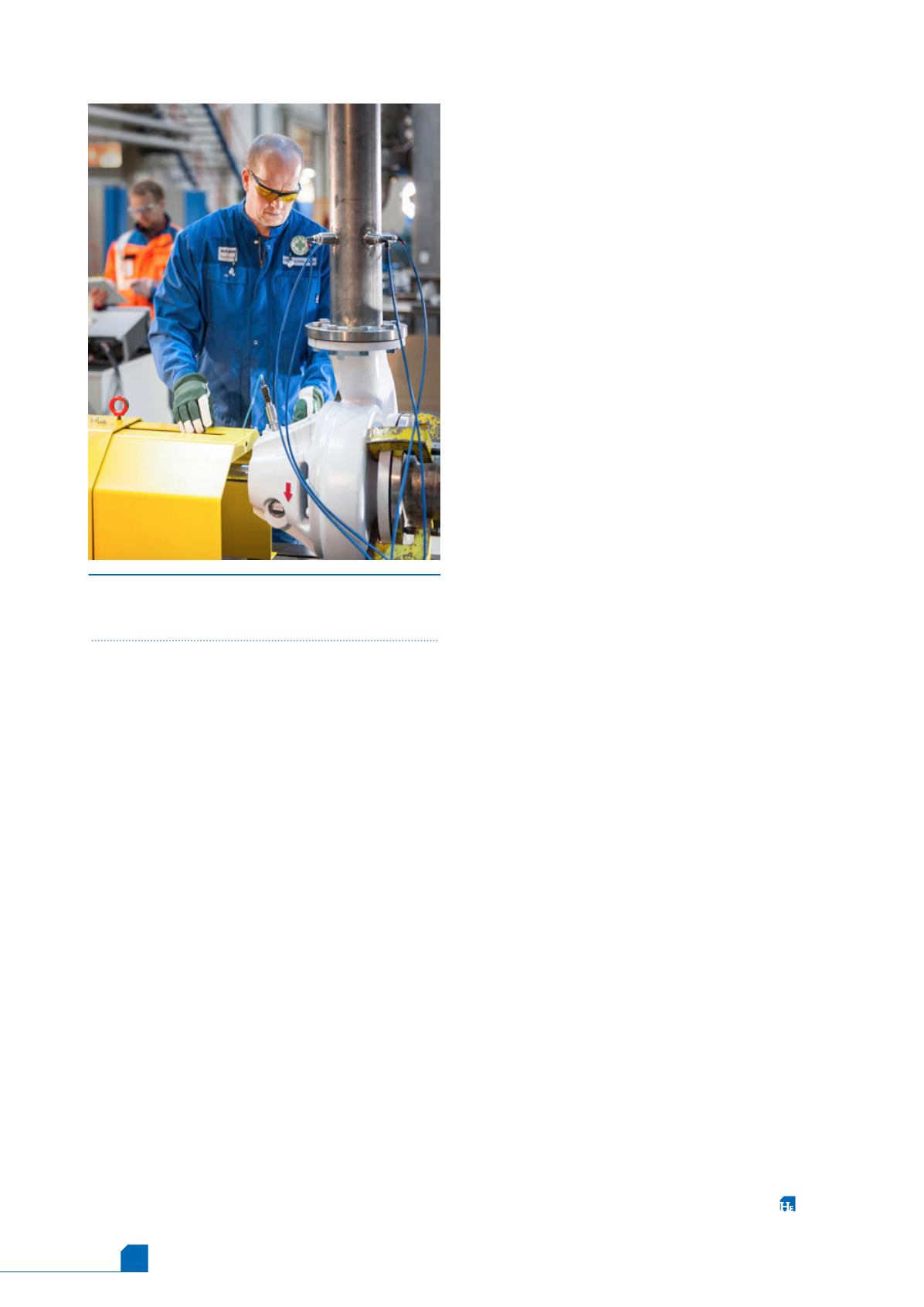
Figure 6.
Working closely with experienced materials
engineers enables the end user to achieve the most
appropriate solution.


