November
2016
13
HYDROCARBON
ENGINEERING
T
he various Balkan countries that are discussed
in this article may seem similar, yet they have
profound social, economic and cultural
differences. Among the few things they do
have in common is their communist past, which started
at the end of World War II and ended in the early 1990s
when the Soviet Union collapsed. Throughout this
period, the countries’ economies were under strong
influence from the USSR – this, obviously, left a strong
imprint on the oil refining industry as well. In the late
1980s to early 1990s, the heyday of the industry,
cumulative capacity of the local refineries constituted
10% of refining in Europe, and refining throughput was
around 50 million tpy. The subsequent events – the
countries distancing from ‘building communism’, the
break up of Yugoslavia and economic recession – all
led to a drop in refining throughput (about
20 million tpy over the past few years). The following
sections look at the historical background, the
dynamics and the current state of the oil refining
industry in such countries as Romania, Bulgaria, Serbia,
Croatia, Bosnia‑Herzegovina, Former Yugoslav Republic
of Macedonia (FYROM), Albania and Slovenia.
Romania
The Romanian oil industry has a long history. Back in the
mid‑19
th
century, Ploesti, a region located between the
Carpathians and Danube, was one of the global oil
production and refining centres. Romanian refining
peaked in 1989 at over 30 million t. At the end of that
same year a popular uprising began, which ended in the
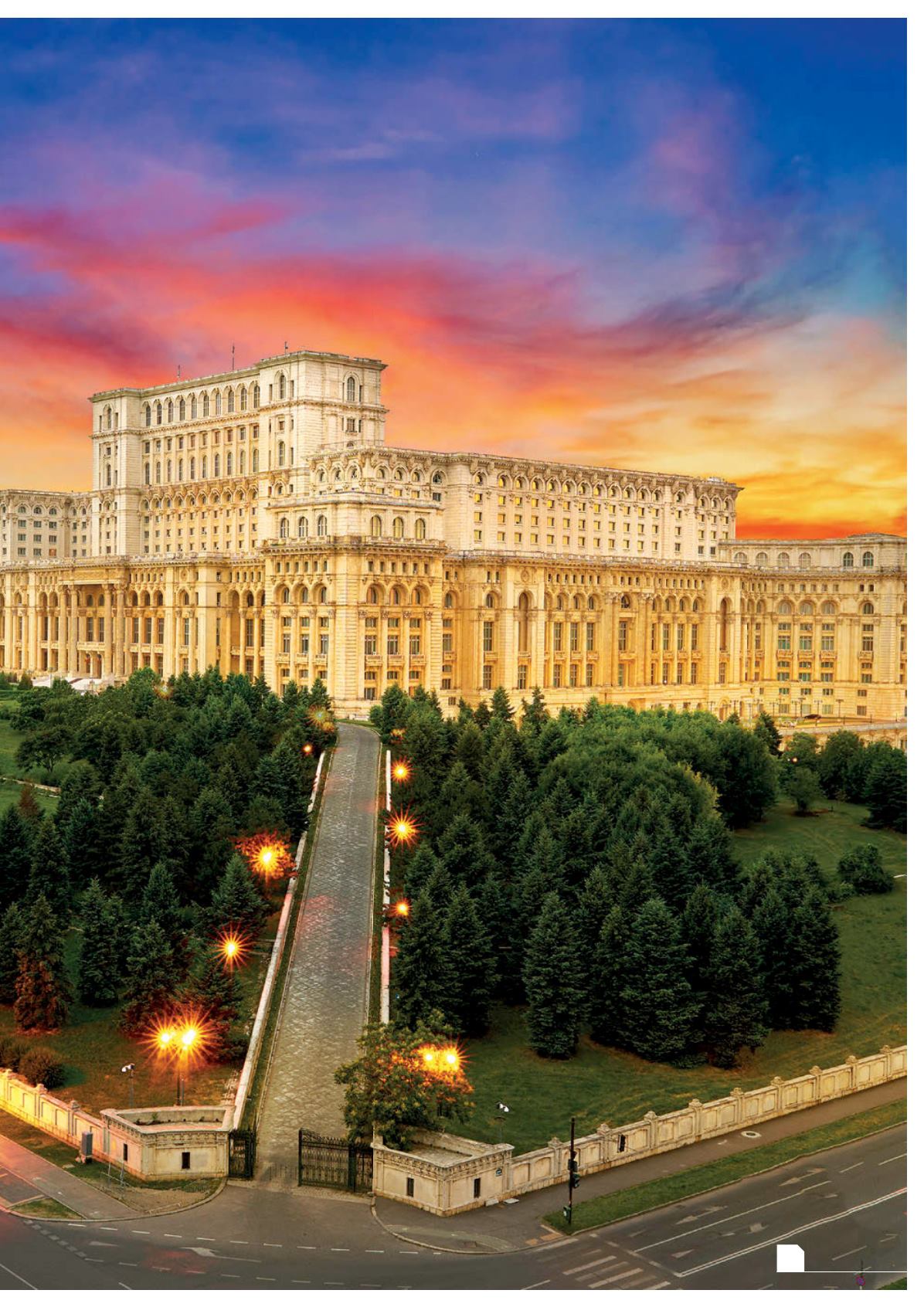
The Parliament Palace in
Bucharest City, Romania.


